



PhD.
PhD.
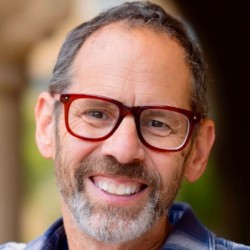
Dr. Hugo Aerts is a Professor at Harvard University and the Director of the Artificial Intelligence in Medicine (AIM) Program. AIM's mission is to accelerate the application of AI algorithms in medical sciences and clinical practice. This academic program centralizes AI expertise stimulating cross-pollination among clinical and technical expertise areas, and provides a common platform to address a wide range of clinical challenges. Dr. Aerts is a leader in medical AI and Principle Investigator on major NIH-supported efforts, including the Quantitative Imaging Network (U01) and Informatics Technology for Cancer Research (U24) initiatives of the NCI. In 2020 he was awarded a prestigious ERC Consolidator grant of the Horizon program from the European Union. His research has resulted in numerous peer-reviewed publications in top-tier journals. In 2022 he was awarded by Web of Science as he was among the top 1% highest cited scientists worldwide. Dr. Aerts is a Professor at Harvard University and an Adjunct Professor at Maastricht University. Dr. Aerts earned his Master in Engineering from Eindhoven Institute of Technology, his PhD from Maastricht University, and his postdoctoral fellowship from Harvard School of Public Health.

PhD.
PhD.
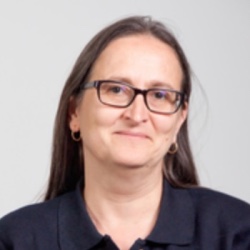
Dr. Dan Jurafsky is Professor of Linguistics, Professor of Computer Science, and Reynolds Professor in Humanities at Stanford University. He is an award-winning teacher, a MacArthur Fellow, the recipient of the Richard C. Atkinson Prize in Psychological and Cognitive Sciences from the National Academy of Sciences, a member of the American Academy of Arts and Sciences, and a Fellow of the Association for Computational Linguistics, the American Association for the Advancement of Science, and the Linguistics Society of America. His research and teaching focus on language models and other natural language processing tools, including their applications to the cognitive and social sciences and to social good. His books include the widely-used online textbook "Speech and Language Processing" and the 2015 international bestseller and James Beard Award-nominee, "The Language of Food". Dan received a Ph.D. in Computer Science in 1992 from the University of California at Berkeley.

PhD.
PhD.
Dr. Gabriela Csurka is a Principal Scientist at NAVER LABS Europe, with over three decades of experience in computer vision, machine learning and physical AI. Her research covers a broad spectrum of topics, including visual recognition, semantic segmentation, domain adaptation, image and 3D scene reconstruction and understanding, and the fusion of visual and textual modalities. Her current interests center on the development and application of 2D and 3D foundation models and multimodal large language models. She has authored over 100 scientific publications and made several significant contributions to the fields of computer vision and pattern recognition. Among these, her most influential work is the development of the Bag-of-Visual-Words (BoV) framework, which fundamentally transformed image categorization and remained a dominant approach until the advent of end-to-end deep learning models.


PhD.
PhD.
Dr. Tom M. Mitchell is the Founders University Professor at Carnegie Mellon University, where he founded the world's first Machine Learning Department, and authored the widely used textbook "Machine Learning." Mitchell's research over the years has focused on machine learning, artificial intelligence, cognitive neuroscience, and the impact of AI on society. Mitchell and colleagues in CMU's Psychology Department used machine learning to create the first computational model to predict fMRI brain activation patterns associated with reading arbitrary nouns, work that has since been extended to sentence and story reading. His novel research on never-ending machine learning produced a computer program that has run continuously for over eight years, teaching itself to read the web. More recently, Mitchell has explored how machine learning and information technology will affect jobs. He co-chaired a study by the National Academies of Sciences, Engineering and Medicine that produced a 2017 report on this topic, and since then has published papers with colleagues suggesting that machine learning technology is more likely to lead to job redefinition than to job replacement. A former president of the AAAI, Mitchell is a fellow of both the AAAI and the American Association for the Advancement of Science, and winner of the 2007 AAAI Distinguished Service Award. He was elected in 2010 to the U.S. National Academy of Engineering, and in 2016 to the American Academy of Arts and Sciences.
Microsoft Research
PhD.
PhD.
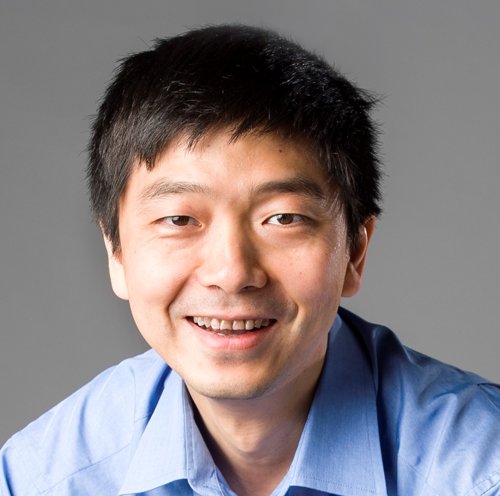
Dr. Hoifung Poon is the General Manager of Real-World Evidence at Microsoft Research and an affiliated faculty at the University of Washington Medical School. He leads biomedical AI research and incubation, with the overarching goal of structuring medical data to optimize delivery and accelerate discovery for precision health. His team and collaborators are among the first to explore large language models (LLMs) and multimodal generative AI in health applications, producing popular open-source foundation models such as PubMedBERT, BioGPT, BiomedCLIP, LLaVA-Med, BiomedParse, with tens of millions of downloads. His latest publications in Nature and Cell feature groundbreaking digital pathology and spatial proteomics foundation models such as GigaPath and GigaTIME. He has led successful research partnerships with large health providers and life science companies, creating AI systems in daily use for applications such as molecular tumor board and clinical trial matching. His prior work has been recognized with Best Paper Awards from premier AI venues such as NAACL, EMNLP, and UAI, and he was named the "Technology Champion" by the Puget Sound Business Journal in the 2024 Health Care Leadership Awards. He received his PhD in Computer Science and Engineering from the University of Washington, specializing in machine learning and NLP.